

Our Sustainability Framework
Our Sustainability Framework provides structure to our sustainability ambitions. It integrates sustainability principles and Value-Based Intermediation (VBI) across the Group—ensuring that we embed sustainability into operations, financing decisions, policies, and partnerships. It provides clear governance, strategic direction, and performance alignment across all our entities.
Our material matters are reflective of our three sustainability themes - Responsible Banking, Conscious Self-Conduct and Positive Societal Impact, which form the core components of our Sustainability Framework.
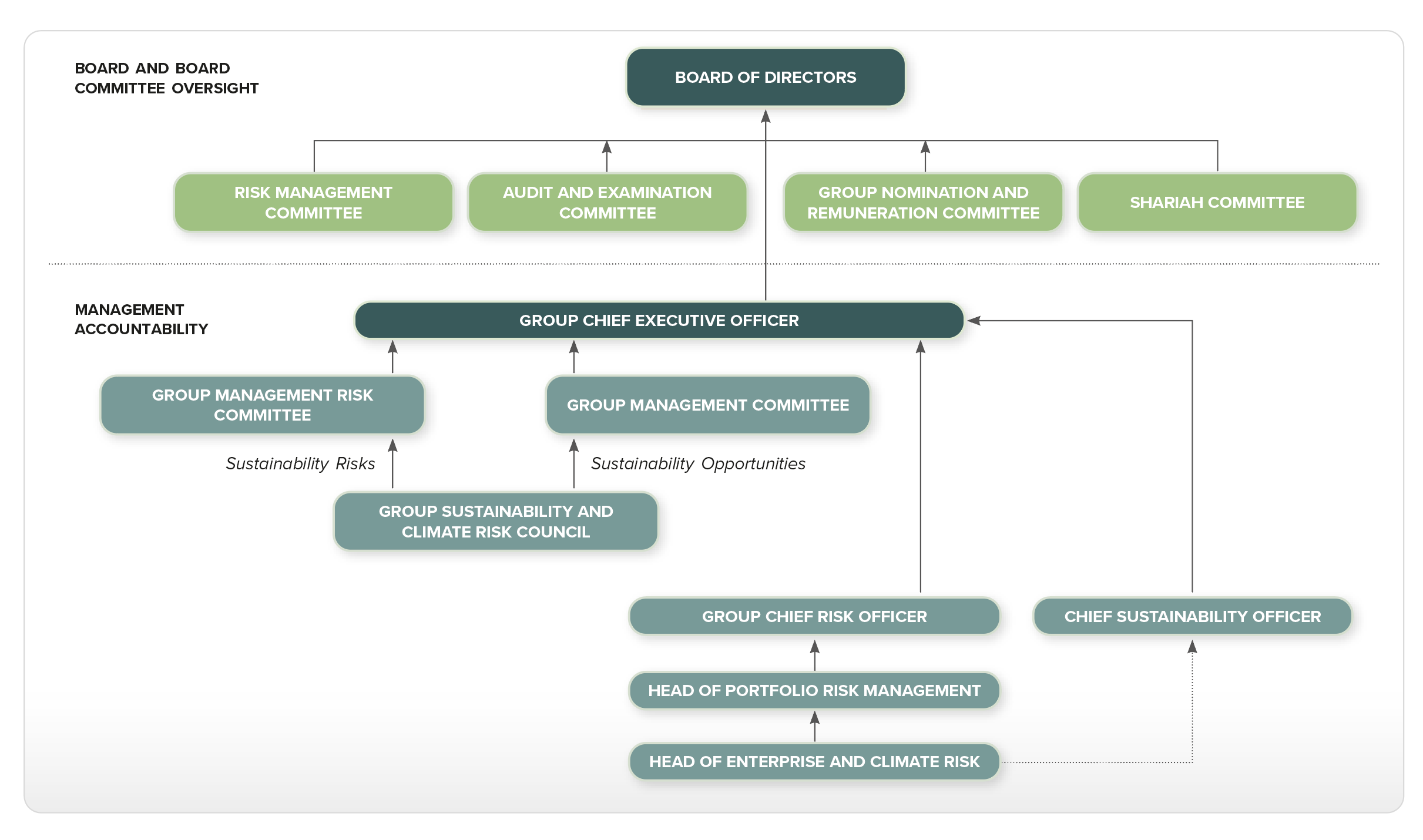
AmBank Group’s Governance Structure
Sustainability Risk Management
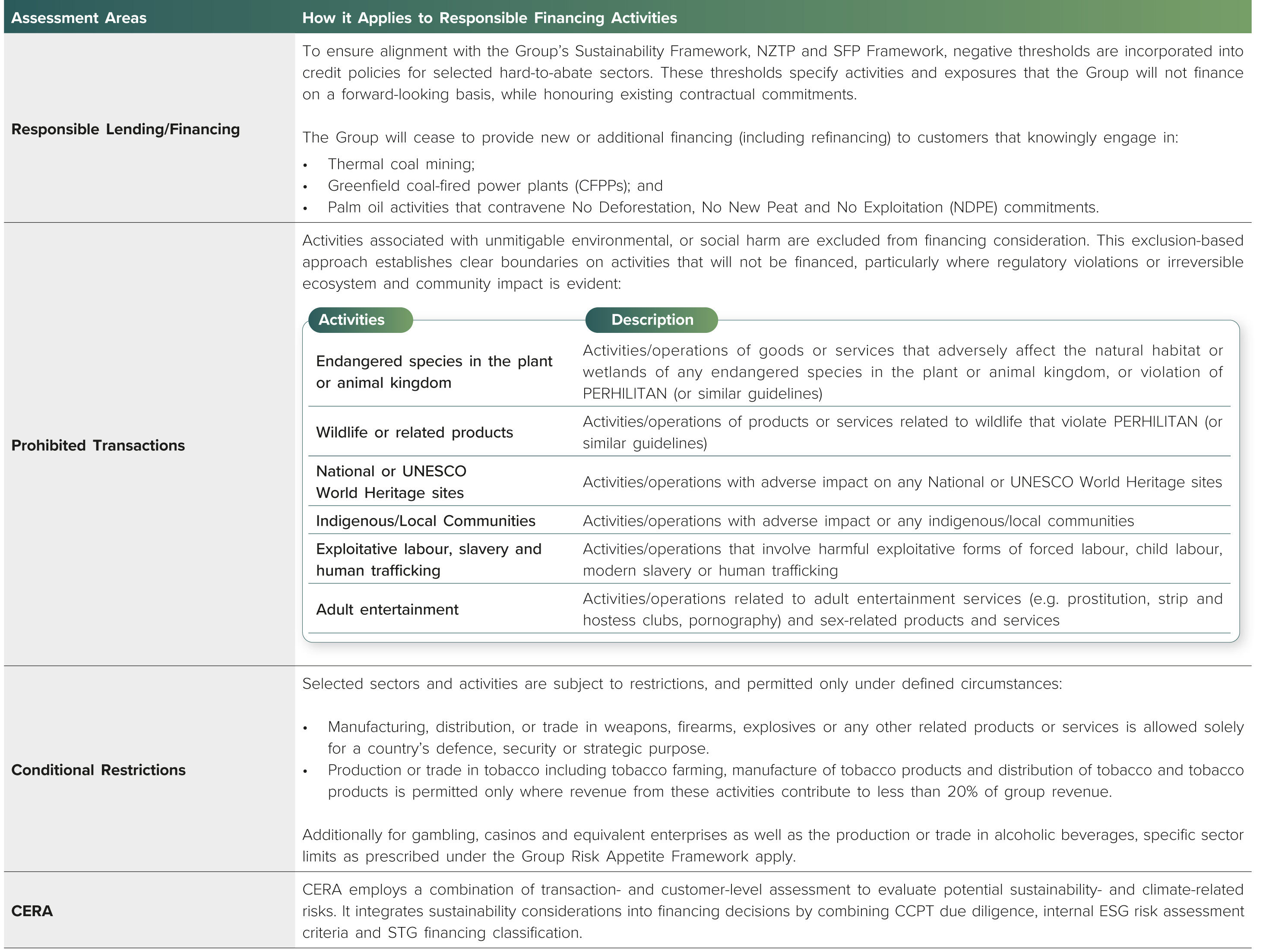
The Group embeds sustainability and climate controls into Group frameworks and policies, which are designed to align with the evolving landscape and regulatory expectations, while improving decision-making and portfolio resilience. To effectively manage sustainability-related risks, AmBank Group embeds targeted control measures and assessments across its portfolios, operations, and customer engagements.
These assessments are undertaken in conjunction with broader financial risk considerations, including credit, market, liquidity, and strategic risk, enabling financing decisions to be evaluated holistically within our risk and return profile. To strengthen this assessment process, our approach comprises four interrelated areas: responsible lending and financing principles, prohibited transactions, conditional restrictions and the Climate Change and ESG Risk Assessment (CERA).
United Nations Sustainable Development Goals (UN SDGs)

Sustainability Themes
AmBank Group embeds sustainability considerations, including climate-related risks and anti-bribery/ corrupt practices into our strategies, business, and operations to contribute to the greater good of our stakeholders, and ensuring the longevity of our relevance and profitability.
The Group has 11 Sustainability Material Matters that reflect the areas where our activities, products, services and business relationships create the most significant actual or potential impact on stakeholders, the economy, the environment and society. These material matters fall within our three sustainability themes.